.png)
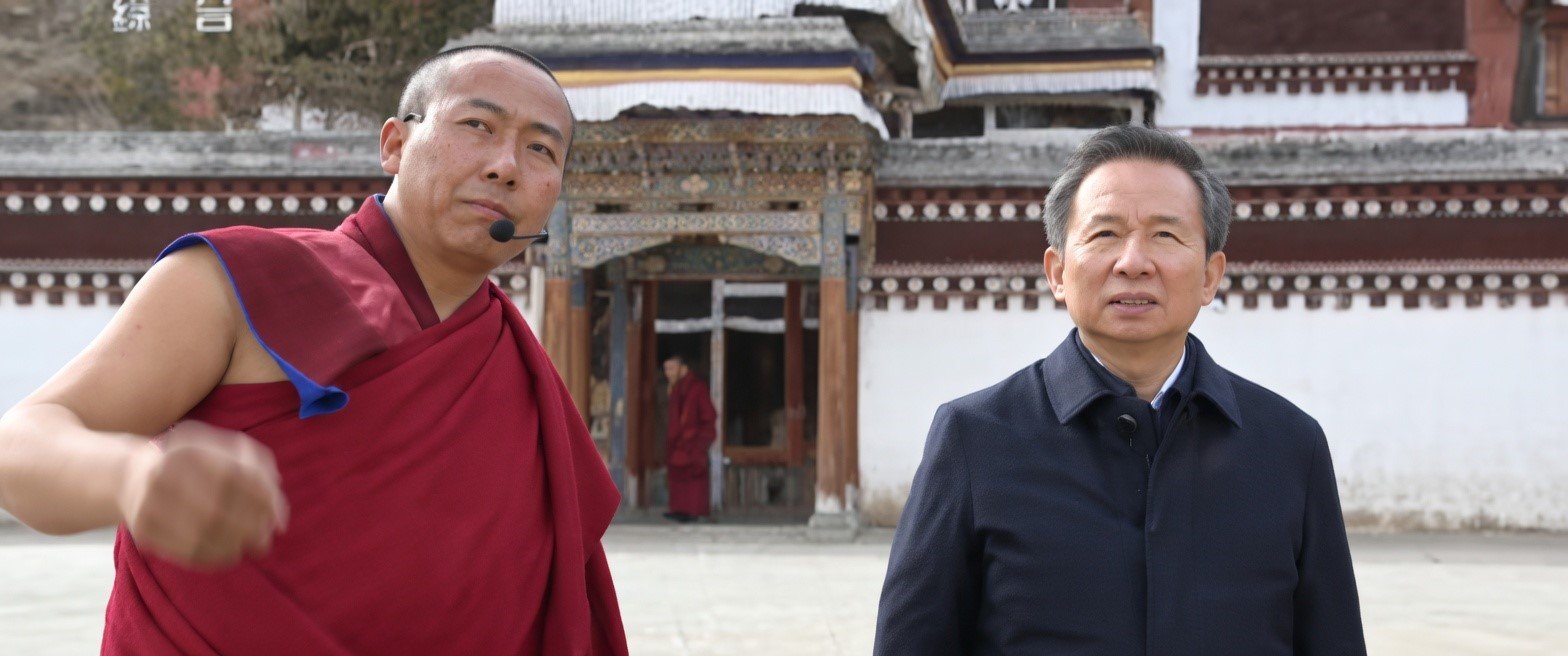
Shrouded in crimson robes, prayer beads moving rhythmically past his fingers, the monk walks towards us.
It is a risky decision.
We are being followed by eight unidentified men. Even saying a few words to us in public could get him in trouble.
But he appears willing to take the chance. "Things here are not good for us," he says quietly.
This monastery in China's south-western Sichuan province has been at the centre of Tibetan resistance for decades - the world learned the name in the late 2000s as Tibetans set themselves on fire there in defiance of Chinese rule. Nearly two decades later, the Kirti monastery still worries Beijing.
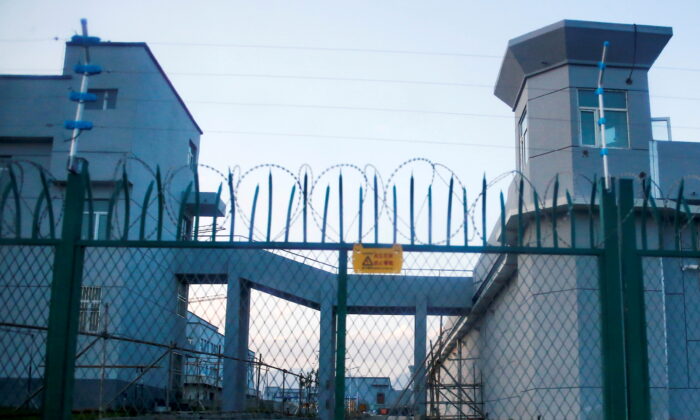
A police station has been built inside the main entrance. It sits alongside a small dark room full of prayer wheels which squeak as they spin. Nests of surveillance cameras on thick steel poles surround the compound, scanning every corner.
"They do not have a good heart; everyone can see it," the monk adds. Then comes a warning. "Be careful, people are watching you."
As the men tailing us come running, the monk walks away.



 (1).jpg)
 (1).jpg)
 (1).jpg)
 (1).jpg)
 (1).jpg)