.png)
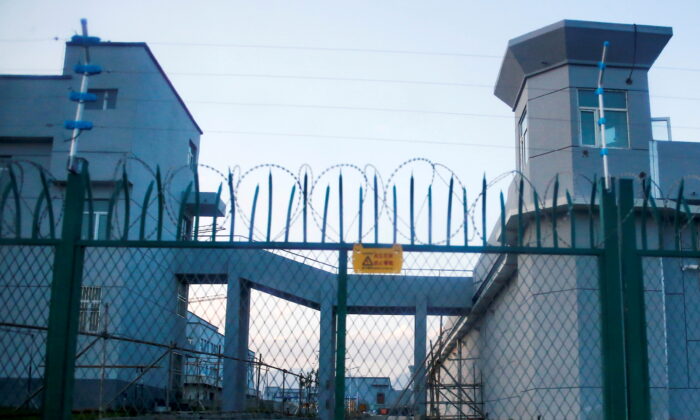
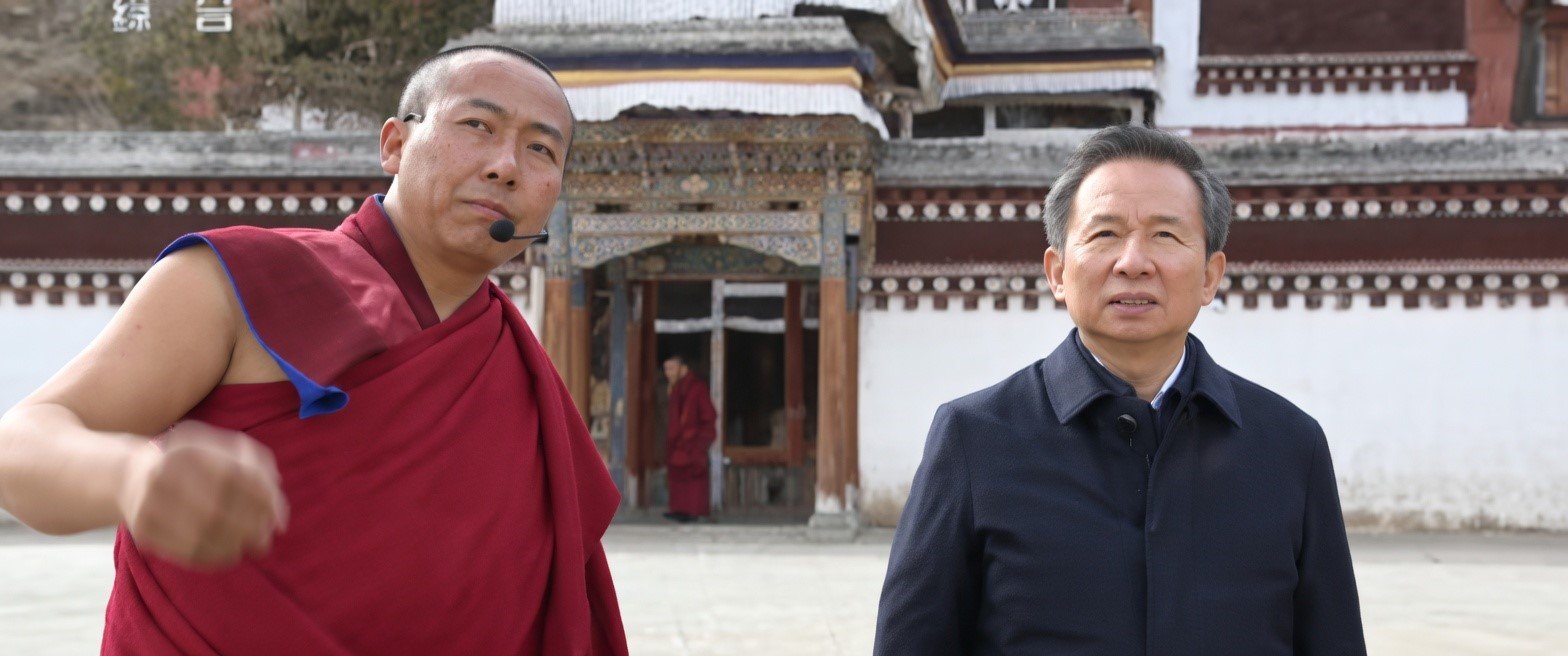
Never mind that China under Xi has been trying to undermine the liberal post-war international order by setting up alternative organizations and schemes that are detrimental to freedom and democracy around the world. Its own repression of Tibet, Xinjiang and Hong Kong are vivid examples.
The “return to China” is the biggest misnomer: Taiwan has never ever been part of the People’s Republic of China, and until 1945 it was a Japanese colony for 50 years. Many in Taiwan view the Japanese period as benign and “strict but fair,” certainly in comparison with the corrupt and repressive Chinese Nationalist Part (KMT) rule of Chiang Kai-shek (蔣介石), who imposed martial law that lasted on the island until 1987, after which the Taiwanese were able to gain the freedom and democracy they presently enjoy.
It is true that before the Japanese period Taiwan was very briefly a “province of China,” but that only lasted eight years.
From 1683 until 1887, the island was formally administered as part of the province of Fukien, but in reality it was a wild and open frontier. More than 100 armed revolts took place during that period, prompting the observation that there was “an uprising every three years and a revolution every five years.”
The inhabitants viewed the Qing Dynasty as very much a foreign colonial regime and in no way saw themselves as “part of China.” During roughly the same period Britain ruled India as a colony. Nobody would argue that India should be returned to Britain.
From before 1683 there is even more evidence that Xi’s claim that “Taiwan has been part of China since ancient times” does not hold water.
Before 1624, Taiwan was inhabited by an indigenous population of Malay-Austronesians, who fought each other ferociously but kept outsiders at bay. Occasionally a Chinese expedition passed by the island, but there was never any official presence.
When the Dutch East India Company arrived in Anping (present-day Tainan) in 1624 to establish a trading post, they found no evidence of any Chinese officialdom in Taiwan, let alone any administrative control. It was certainly not part of the Ming Dynasty (1368-1644).
In 1623, emissaries of Tianqi (天?帝), then-Ming Dynasty emperor, even told the Dutch — who were trying to take Macau from the Portuguese as they looked for a port through which they could trade with China — to go “beyond our territory.” They did not object when the Dutch went to Formosa, building Fort Zeelandia and establishing control as part of the Dutch East India Company, which lasted until 1662. It certainly was not “part of China” during those days.
In 1662, Dutch rule ended when Ming Dynasty loyalist and warlord Cheng Cheng-kung (鄭成功), known as Koxinga, was driven from China by the advancing Manchu armies, he took refuge on the island, and established the short-lived Kingdom of Tungning.
The Ming Dynasty itself was long gone by that time, and the Cheng family rule ended in 1683, when Koxinga’s grandson was defeated by the Manchu navy at the battle of the Pescadores.
In 1683, the new Manchu Qing emperor was initially not interested in the island at all. His main goal was to defeat the last remnants of the Ming Dynasty. Emperor Kangxi (康熙帝) stated: “Taiwan is outside our empire and of no great consequence.” He offered to let the Dutch buy it back.
There is no historical basis for the Chinese claims to Taiwan. Of course, the main reason for the US and other friendly countries to push back hard against Xi’s claims is that the Taiwanese fought hard to attain their democracy and under the UN Charter have the right to determine their own future.
The only peaceful resolution could be achieved if China, the US and other countries accept Taiwan as a fully free, equal and democratic member of the international community.
Gerrit van der Wees is a former Dutch diplomat who teaches the history of Taiwan and US relations with East Asia at George Mason University in Fairfax, Virginia.




 (1).jpg)
 (1).jpg)
 (1).jpg)
 (1).jpg)
 (1).jpg)